Ethiopia to fill Gibe III dam, rejects renewed calls for halt
·
·
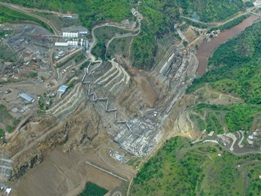 Addis
Ababa, 12 June 2014 (WIC) –Ethiopia has rejected renewed calls for
suspension of the construction of Gibe III dam as it prepares to start filling
the reservoir of the hydroelectric dam being built in the lower valley of the
Omo River
Addis
Ababa, 12 June 2014 (WIC) –Ethiopia has rejected renewed calls for
suspension of the construction of Gibe III dam as it prepares to start filling
the reservoir of the hydroelectric dam being built in the lower valley of the
Omo River
Ever
since the country launched the Gibe III project, some groups have been calling
for the halt of the construction citing environmental and social concerns.
However, the construction has continued unabated with over 84 percent of the
project so far completed
“We
expect to start filling the reservoir in few months and begin dry commissioning
afterwards,” Fekahmed Negash, boundary and transboundary rivers affairs
director at the Ministry of Water, Irrigation and Energy, told WIC.
Fekahmed rejected a renewed call by the World Heritage Site Committee asking
Ethiopia not to fill the dam ‘until a comprehensive social and environmental
study of the developments is completed’.
“Building the dam is our sovereign right. Telling us to suspend the
construction amounts to trampling this right,” Fekahmed said. He said five
environmental impact assessment studies conducted on Gibe III project
commissioned by independent organs support Ethiopia’s position that the project
will cause no ‘significant harm’
The
organs include the African Development Bank, World Bank, European Bank and two
studies commissioned by the Ethiopian Electric Power Corporation.
Omo River contributes to 80 percent of the Turkana Lake, a rift valley lake
whose large swaths are located within the Kenyan territory. Omo River joins the
Turkana Lake, a UNESCO registered world heritage site, inside Ethiopia.
Last month the World Heritage Site Committee called for Lake Turkana, the
world’s largest desert lake, to be listed as a ‘World Heritage Site in Danger’,
a move that might put pressure on the Kenyan government.
Independent studies say the Lake level has declined 15 to 20 m during the last
century. The lake’s water level indicate wide variations but evaporation posses
the biggest loss of water.
“The level of water has been declining for years even before the launch of this
project,” Fekahmed noted. “By storing and regulating the water in a cooler
climate and inside a gorge, Gibe III dam reduces the amount of evaporation
loss,” he added
The
Ethiopian Ministry of Culture and Tourism has extended an invitation to
heritage conservationists in Kenya who are expected to visit the dam site. In
the past, a 26-member Kenyan delegation, including parliamentarians, had
visited the project. Kenya has since expressed its support for the project
“Both
Ethiopia and Kenya are working together to preserve the ecosystem of the
Turkana Lake and jointly administer it,’ Fekahmed explained.
“Those calling for the suspension of the project could come and work with us
instead of coming out with orders that defy our sovereign rights,” he added
The 1,870
MW Gibe III hydropower plant is expected to nearly double Ethiopia’s current
power generating capacity. Ethiopia plans to export a portion of that
electricity to Kenya with a power purchase agreement already signed between the
two neighboring countries.
Gibe III is the tallest a Roller Compacted Concrete (RCC) dam in the world
standing 243 meters tall, which will have the capacity to hold as much as 14
billion cubic meters of water.


