10
NOVEMBER 2014
Rwanda: Our Current
Priority Is Economic Integration, Ethiopian Envoy Says
By Collins Mwai
Amb.
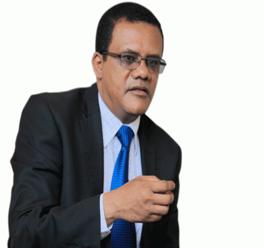
Wakjira during the interview in Kigali last week. (Doreen Umutesi)
 Rwanda and Ethiopia have
enjoyed close bilateral ties for decades. Ethiopia was among the first
countries to respond and urged the international community to intervene during
the 1994 Genocide against the Tutsi. The two nations have signed several
agreements over the years to work jointly. The Ethiopian ambassador to Rwanda, Degefe
Bula Wakjira, spoke to The New Times' Collins Mwai about the impacts
of the cooperation and the way forward.
Rwanda and Ethiopia have
enjoyed close bilateral ties for decades. Ethiopia was among the first
countries to respond and urged the international community to intervene during
the 1994 Genocide against the Tutsi. The two nations have signed several
agreements over the years to work jointly. The Ethiopian ambassador to Rwanda, Degefe
Bula Wakjira, spoke to The New Times' Collins Mwai about the impacts
of the cooperation and the way forward.
How
close are diplomatic and bilateral ties in the two countries?
Ethiopia and Rwanda have had very
good bilateral and diplomatic ties for decades. We have worked closely on
several issues, including ensuring peace and security in the region. We share a
common urge to see peace and security in the region. We have jointly sent our
forces [for peacekeeping] as well as shared experiences on these areas.
Both nations are also currently
experiencing rapid economic growth and development most notably the increase in
the gross domestic products. In pursuit to achieve the Millennium Development
Goals, the two countries are also employing sound polices and strategies and
have leadership commitments where we can share experiences and learn from each
other.
It is, however, remarkable the
progress that Rwanda has been able to achieve in ICT development in the past
years, it is an area we can learn from Rwanda.
In 2012, we signed a joint
ministerial commission which has provided a platform for cooperation between
the two governments in a range of areas. In the last few years, we have had
agreements in trade cooperation, agricultural cooperation, police force
cooperation, education, among others.
We also have other agreements
that are soon to be ratified which will further bring the two nations closer.
Rwanda
and Ethiopia have signed several agreements on cooperation in the last decade
or so, have there been any impacts from these signings?
The implementation of the
agreements has had numerous impacts in several fields. There has been bench
marking and exchange of experiences between the police forces and defense
forces of the two nations over the years. There has been experience sharing and
bench marking practices between the managements of the capital cities of the
two countries which will be formalized soon.
Rwandan students have also had
training in Ethiopian Universities, among other areas of cooperation.
What is more important,
however, is economic integration, connecting our business people for them to
develop their potential in their areas of business. In future it will be our biggest
priorities.
Ethiopia
seems to have interest in the affairs of the East African Community; your
country has been an observer in several of the bloc meetings. Is it likely that
you are soon to join EAC?
EAC is increasingly becoming a
strong region in terms of development projects; our priority is economic
integration with the region which will open up other ways of integration like
infrastructure and political federation.
It is possible for nations to
be members of both EAC and IGAD. We would be ready to be members of The EAC
community, but currently we are focused on building ties on various aspects
(like infrastructure, economically) with countries in the region. Not being a
member of the EAC has not impacted negatively on our relations with member countries.
Although Ethiopia is not a
member of EAC, we have been attending meetings as observers as well as taking
part in some projects. In the future we are likely to join the EAC community.
Your country has made a
name for itself as one of the biggest hydro-electric power producers in the
continent. It has been often said that you are looking for ways to export it to
neighboring countries, including Rwanda. How far are the export plans?
Ethiopia has placed production
of hydroelectric power among its top objectives, currently we have about 2,300
megawatts, we have ongoing projects under construction that are soon to be
completed which will significantly boost our capacity. In the next three years
we plan to have about 10,000 megawatts.
We are already supplying neighboring
countries such as South Sudan, Djibouti and already have demand with countries
that are members of EAC region including Rwanda.
All these will further
contribute to integration since nations will have to realign themselves to do
business together through ways such as harmonization of infrastructure and
closer business ties.
We will soon be able to supply
power to these countries. As we work on producing power, there are other
projects that will also be undertaken such as harmonization of distribution
grids to make it possible to transmit it. All these will further bring
countries together.
One
area that Rwanda could learn from Ethiopia is becoming a hub for multinational
and international bodies. How should Rwanda pick some leafs in this respect?
The capital cities of the two
countries are in the process of signing a joint framework of cooperation
between the two cities that will establish a platform for partnership and cooperation
in several areas. It will provide an opportunity to exchange best practices.
It is possible to have the same
in Rwanda going by the country's development plans and ambition. The country
has managed to have a proper atmosphere for investments from all over the
world. Rwanda is on the right track to achieve these objectives. Signing a
sister city agreement will further provide chances for Rwanda to gain tips from
the region.
A
similarity of the two countries is the security threats posed by terrorists groups
operating from neighboring countries. Al Shaabab in the case of Ethiopia and
FDLR in Rwanda's case, as a way forward, how is it best to deal with such
challenges?
Ethiopia is no stranger to
insecurity challenges posed by terrorists. We have faced the Al Shaabab
insecurity threat for quite a while now. We are cooperating with neighboring
countries by providing troops to the Mission in Somalia (AMISOM). There has
been a lot of progress made and the terrorism forces are getting weaker.
The way forward for the
countries in the region is to jointly work together in building a defense
against terrorists, sharing information and pursuing them. The existence of
terrorism does not threaten one country alone; it makes the entire region
unstable and threatens development. It is why we should keep jointly sending
our defense forces to share experience and contribution to the course.
We have to also jointly support
the government and the people of Somalia and other nations that have such
security problems in restoring peace and stability in their country.
Any
other remarks?
Currently, all countries have
their individual objectives, and plans on how to achieve them, it is however
very important to come together in pursuing these objectives.
The bottom line is that all the
nations in the region want the best for their citizens; we all want prosperity
and improved lives. All these are possible when we integrate our efforts in
pursuit of these objectives.
editorial@newtimes.co.rw


